


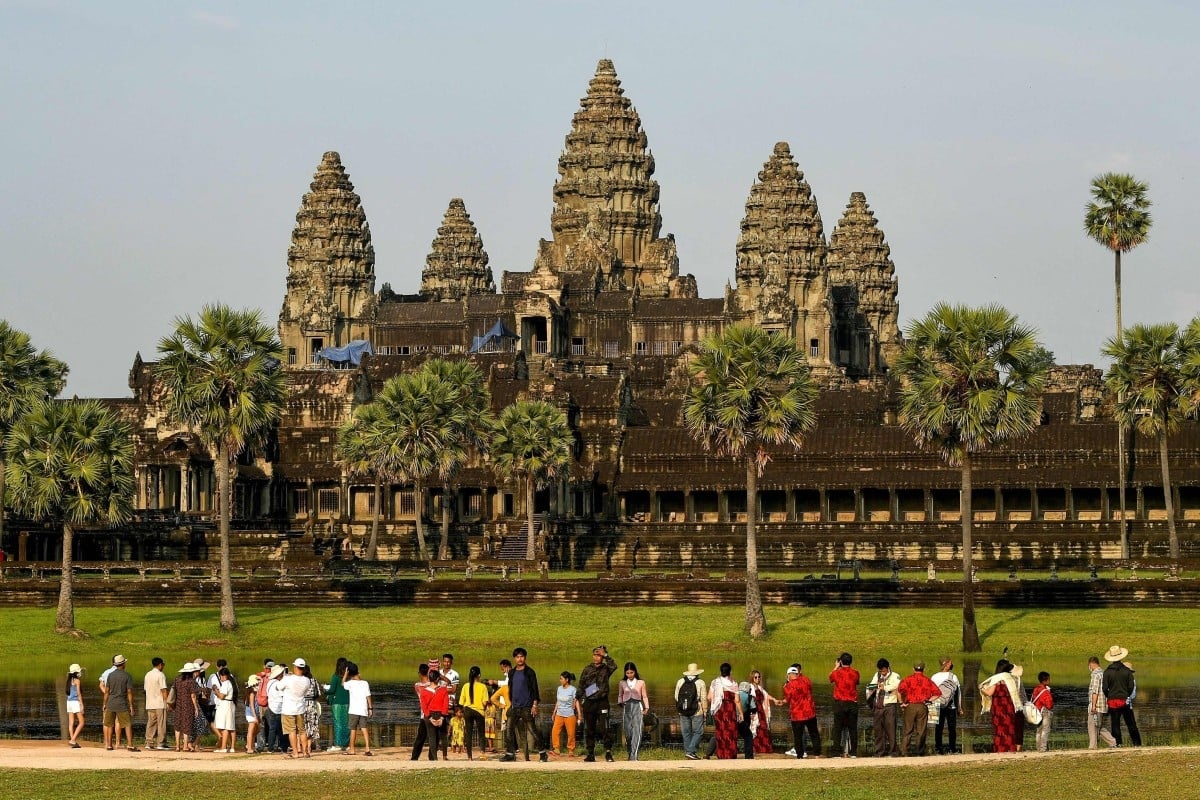
Tourists visit the Angkor Wat temple complex in Siem Reap province, Cambodia. Photo: SCMP.
Previously, watching the sunrise over Angkor Wat meant jostling with crowds, hundreds of phone screens lighting up in the darkness as tour buses constantly brought visitors to find the perfect spot for photos.
Currently, this temple complex, dating back to the 12th century, is relatively deserted. Tourism businesses report a significant decline in visitors to one of Cambodia's most popular destinations.
"Angkor is the least visited area I've seen in years," Akim Ly, founder of Adventures Cambodia, a travel company in Siem Reap and a member of the Cambodia Tourism Association, told SCMP .
According to official figures, Cambodia welcomed 1.75 million international tourists in the first six months of the year, a 47.9% decrease compared to 3.36 million in the same period last year. This decline is a major blow to the tourism industry, which contributes nearly 10% to Cambodia's GDP. Just two years ago, the country recorded a record 6.7 million international visitors.
Meanwhile, neighboring countries recorded only slight declines due to air travel disruptions related to the US-Israel conflict with Iran . Thailand welcomed over 14 million visitors in the first five months of the year, while Vietnam reached over 10 million.
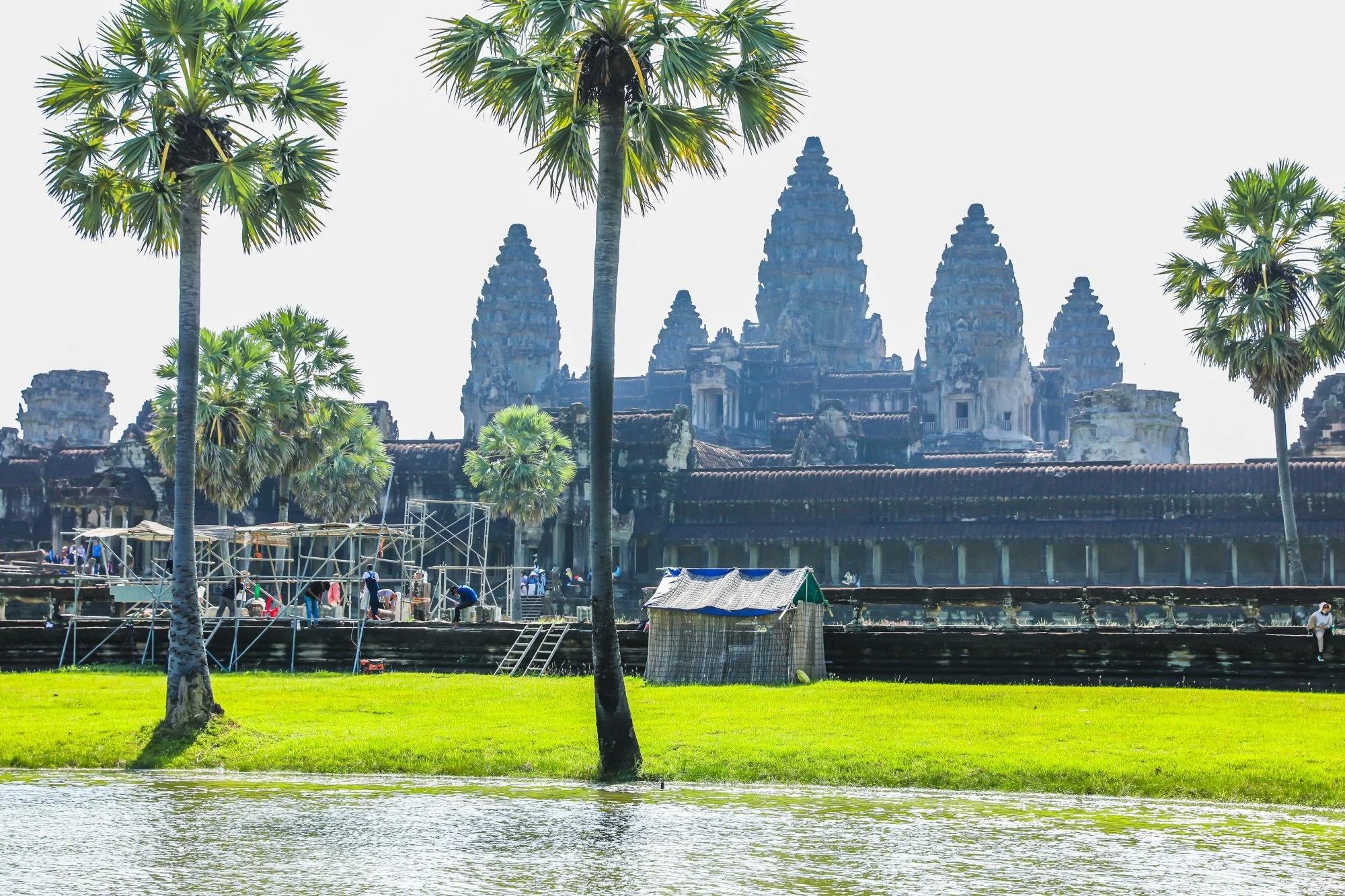
During the off-season for tourists, authorities are restoring the Angkor Wat temple complex in Siem Reap province, Cambodia, on July 20. Photo: Xinhua.
Fear
According to Mr. Ly, security is becoming a top concern for tourists. While previously the common question was which temple to choose to watch the sunrise, now many people are asking, "Is Cambodia safe right now?"
The number of tourists entering by land has decreased by 67.5% since Cambodia and Thailand closed their border crossings last June amid clashes. This used to be a major route for tourists to Siem Reap province, home to Angkor Wat.
Meanwhile, air travel arrivals fell by 19.8%. "Border conflicts in the region have strongly impacted land travel and visitor numbers," said Win Zaw, General Manager of Asia Expeditions, a travel company in Phnom Penh.
However, border issues are far removed from major tourist destinations like Siem Reap, Angkor Wat, or Koh Kong.

Computer screens inside a complex allegedly used for fraud in the Thai-Cambodian border region, which Thai troops raided in March. Photo: Reuters.
Besides border tensions, Cambodia is also affected by the image of online scam networks that have flourished after the pandemic. These networks have been accused of human trafficking, cracked down on by the government , and have attracted international attention.
"The fraudulent complexes are a real criminal problem. But a tourist's trip here, whether with us or any other organization I know, has nothing to do with that world ," Ly said, arguing that potential border conflict hotspots far from Angkor and Siem Reap remain peaceful.
The decline in tourists has also affected Mondulkiri, an eastern Cambodian province bordering Vietnam, known for its ecotourism destinations and cool climate.
Sokunthea Yin, a local guide and owner of Bamboo Cafe and Valley Lodge in Mondulkiri, said that European tourists who used to come here for trekking and nature relaxation are now almost nonexistent. Domestic weekend getaways are partially compensating for the drop in international visitors.
According to Yin, many foreign tourists who still visit Mondulkiri are surprised by Cambodia's peacefulness, contrary to the negative or exaggerated information circulating online.
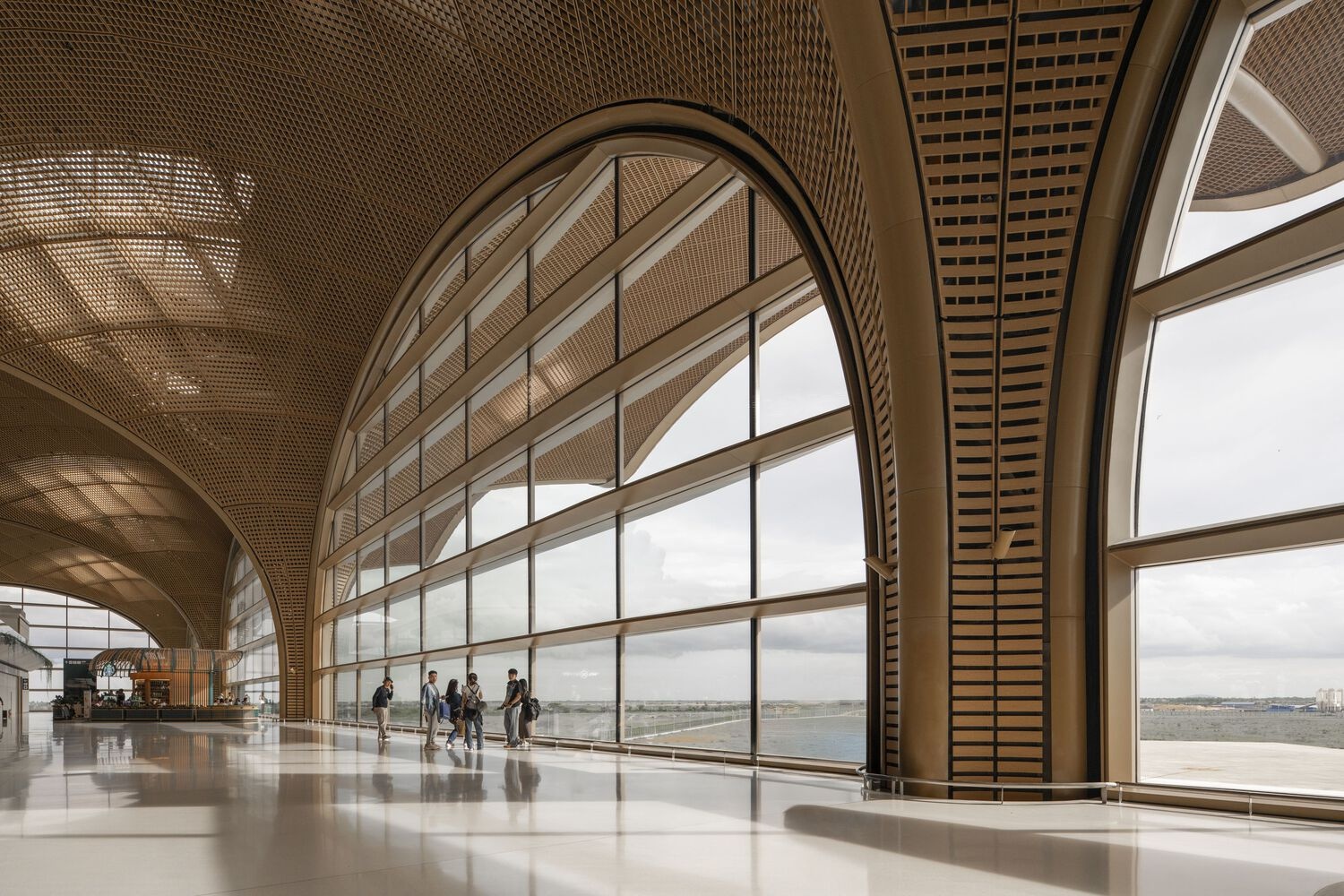
Inside Cambodia's $2 billion Techo Airport terminal. Photo: Nigel Young/Arch Daily.
Find ways to extend your stay.
Some businesses in the industry believe that the current crisis also presents an opportunity for Cambodia to change its marketing approach, rather than simply being seen as a short stop on a journey to explore the Mekong region.
"For many years, we accepted Cambodia being marketed as an additional destination on a two-night Thailand tour, visiting temples and then returning to the beach," Mr. Ly said.
According to him, Cambodia deserves a week-long trip instead of just 48 hours. The smaller decrease in air travel also shows that there are still tourists actively choosing Cambodia as a destination rather than just passing through.
Mr. Ly suggested that Cambodia should target long-distance travelers who plan their trips months in advance, stay longer, and tend to spend more.
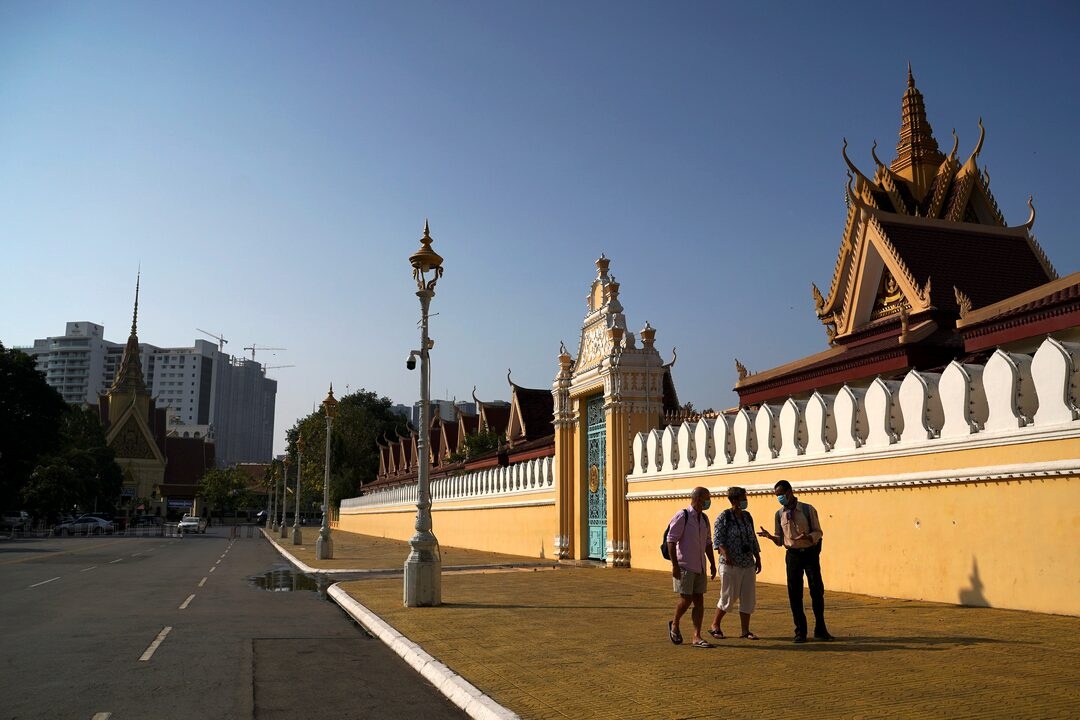
Tourists walk with a guide outside the Royal Palace in Phnom Penh, Cambodia, in 2020. Photo: Reuters .
Peter Brongers, former Vice President of the Cambodia Tourism Federation, wrote in The Diplomat in May that a structural weakness of Cambodian tourism is its over-reliance on Angkor Wat. He argued that Cambodia needs to showcase other reasons for tourists to visit the country.
Win Zaw argues that Cambodia's geographical location between Laos, Thailand, and Vietnam has long made it a popular choice for budget-friendly multi-country itineraries.
He believes this is an opportunity for Cambodia to reposition itself as a high-end tourist destination, with "significantly more reasonable" costs compared to its neighbors. Nature, wildlife, beaches, cuisine, golf, and history could be advantages to exploit.
Yin proposed developing tourism in the highlands of Mondulkiri and Ratanakiri, the Cardamom Mountains, Chi Phat, and Mekong River communities for tourists interested in wildlife and rural life.
According to him, promoting these areas will encourage tourists to stay longer, bring tourism revenue directly to rural communities, and allow them to experience Cambodia's pristine natural landscapes.
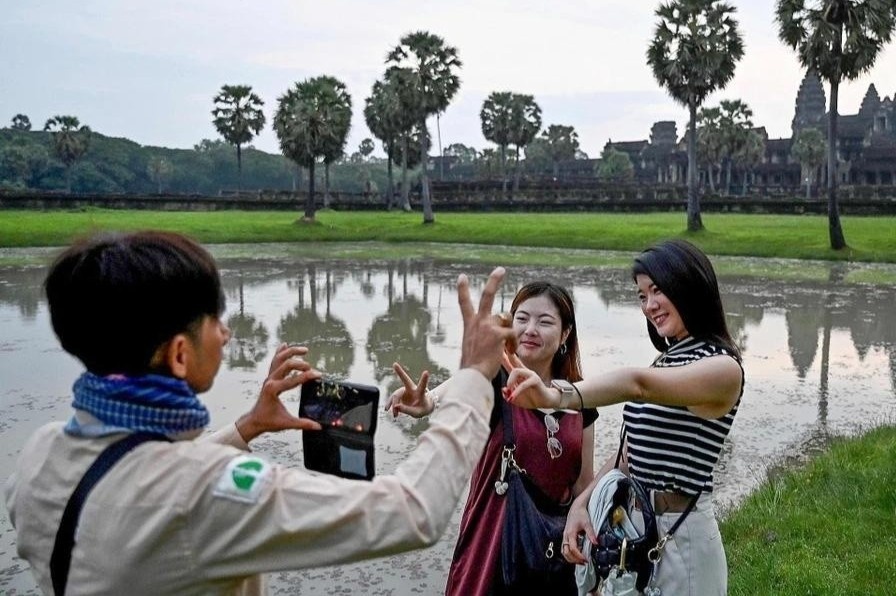
A Cambodian tour guide helps Chinese tourists take photos at the Angkor Wat temple complex in Siem Reap province, 2024. Photo: CFP .