



Cruciferous vegetables are common, inexpensive, and readily available. Researchers have investigated a possible link between eating cruciferous vegetables and cancer risk.
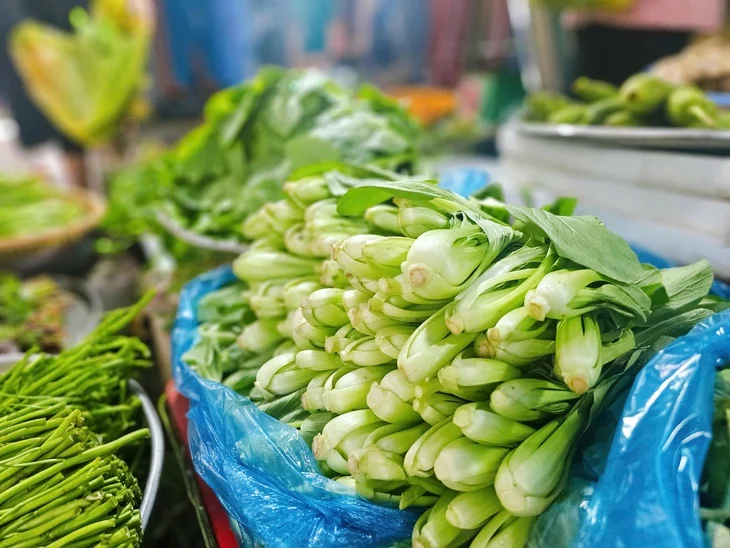
Various types of leafy vegetables - Photo: NHAT XUAN
Among cruciferous vegetables, spinach, also known as kale, is a versatile leafy green vegetable that offers many health benefits. Here are some things that can happen to your body when you eat spinach regularly.
Provides many vitamins and minerals.
Spinach is rich in nutrients and low in calories. A 100g serving of spinach provides vitamins and minerals such as:
- Folate, a type of B vitamin, helps in the formation of red blood cells and DNA.
- Vitamin A, an antioxidant, helps boost eye health, bone health, and the immune system.
- Vitamin C, an antioxidant, supports bone and skin health and boosts the immune system.
- Vitamin K helps support wound healing.
Spinach also provides iron, magnesium, potassium, calcium, and small amounts of other B vitamins.
Provides antioxidants
Spinach contains flavonoid antioxidants that help reduce inflammation and protect against disease. The antioxidants in spinach can prevent oxidative stress. This type of cellular damage is an imbalance between antioxidants and unstable atoms called free radicals. It can lead to an increased risk of cancer, heart disease, and type 2 diabetes.
Helps stabilize blood pressure
Spinach is a source of natural compounds called nitrates, which help to dilate blood vessels. This improves blood flow and reduces strain on the heart.
Supports eye health
Lutein, an antioxidant found in spinach, may help prevent age-related macular degeneration. This eye disease can blur sharp central vision, affecting reading and driving. Macular degeneration is the leading cause of vision loss in people over 55.
Spinach, rich in lutein, can increase the optical density of macular pigment. This pigment acts like internal sunglasses to protect your eyes. Reduced macular pigment is a risk factor for macular degeneration.
Nutritional value of spinach
Spinach is low in calories, with about 91% of its weight being water. A 30g serving of raw spinach contains the following nutrients:
Calories: 6.9; Fat: 0.1g; Sodium: 23.7mg; Carbohydrate: 1.1g; Fiber: 0.7g; Protein: 0.9g
Do cruciferous vegetables play a role in preventing four types of cancer?
According to the Clinical Nutrition Center of K Hospital, cruciferous vegetables including cabbage, Chinese cabbage, cauliflower, Brussels sprouts, kale, collard greens, radishes, spinach, lettuce, and watercress are rich in nutrients such as carotenoids (beta-carotene, lutein, zeaxanthin); vitamins C, E, and K; folate; and minerals, and are a good source of fiber.
Additionally, cruciferous vegetables contain glucosinolates, sulfur-containing compounds that create the pungent aroma and bitter taste of cruciferous vegetables.
During food processing, chewing, and digestion, glucosinolates in cruciferous vegetables are broken down to form bioactive compounds such as indoles, nitriles, thiocyanates, and isothiocyanates.
Of these, indole-3-carbinol (an indole) and sulforaphane (an isothiocyanate) were most extensively studied for their anticancer effects. Indoles and isothiocyanates were found to inhibit cancer growth in several organs in mice, including the bladder, breast, intestine, liver, lungs, and stomach.
Studies have shown that indole-3-carbinol is more effective than a placebo in reducing the growth of abnormal cells on the surface of the cervix.
Researchers investigated the possible link between eating cruciferous vegetables and cancer risk. They found that eating more cruciferous vegetables impacts the risk of four common types of cancer:
- Prostate cancer: Several case-control studies have found that people who eat a lot of cruciferous vegetables have a lower risk of prostate cancer.
- Colorectal cancer: A study on diet and cancer in the Netherlands showed that women who ate more cruciferous vegetables had a reduced risk of bowel cancer (excluding rectal cancer).
- Lung cancer: Studies in Europe, the Netherlands, and the United States have yielded mixed results. Most studies have reported little association, but one US analysis found that women who ate more than five servings of cruciferous vegetables per week had a lower risk of lung cancer.
- Breast cancer: A controlled study showed that women who ate more cruciferous vegetables had a lower risk of breast cancer.
Thus, although the evidence is not yet conclusive, eating more vegetables in general, and cruciferous vegetables in particular, may protect against some cancers and should be included in a healthy diet.