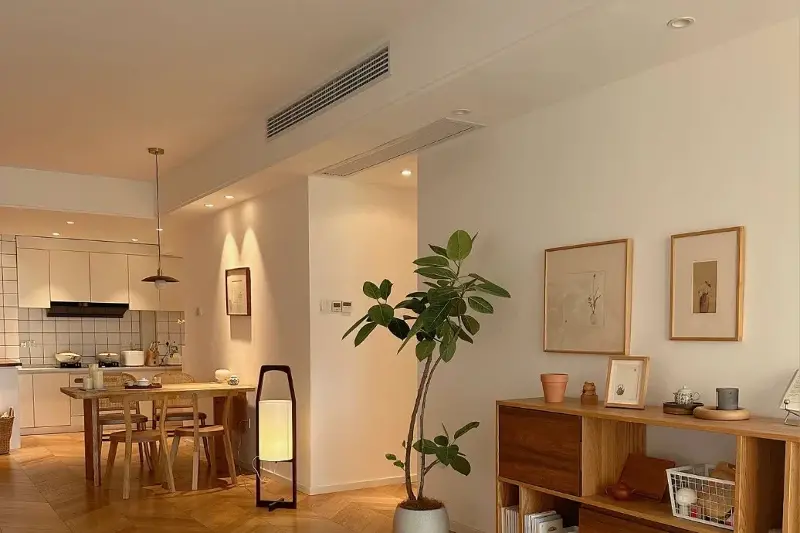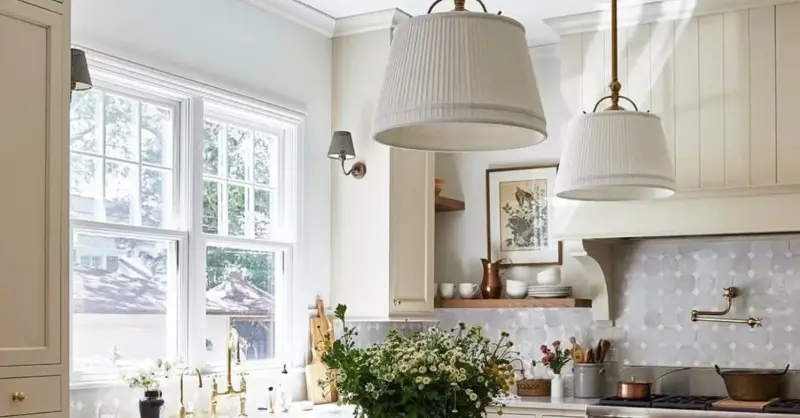
The kitchen is considered a source of energy that can bring wealth to the homeowner. Therefore, arranging the kitchen according to feng shui principles is a matter of great importance.
Here are five golden rules homeowners should follow to ensure their kitchen always attracts wealth and good fortune.
Kitchen placement
The first and most important principle is to position the kitchen in a "sitting in an inauspicious direction and facing an auspicious direction" configuration, meaning the stove's back faces an unfavorable direction but its front faces a favorable direction. This arrangement is believed to suppress negative energy and attract positive energy, ensuring the homeowner's wealth and prosperity.
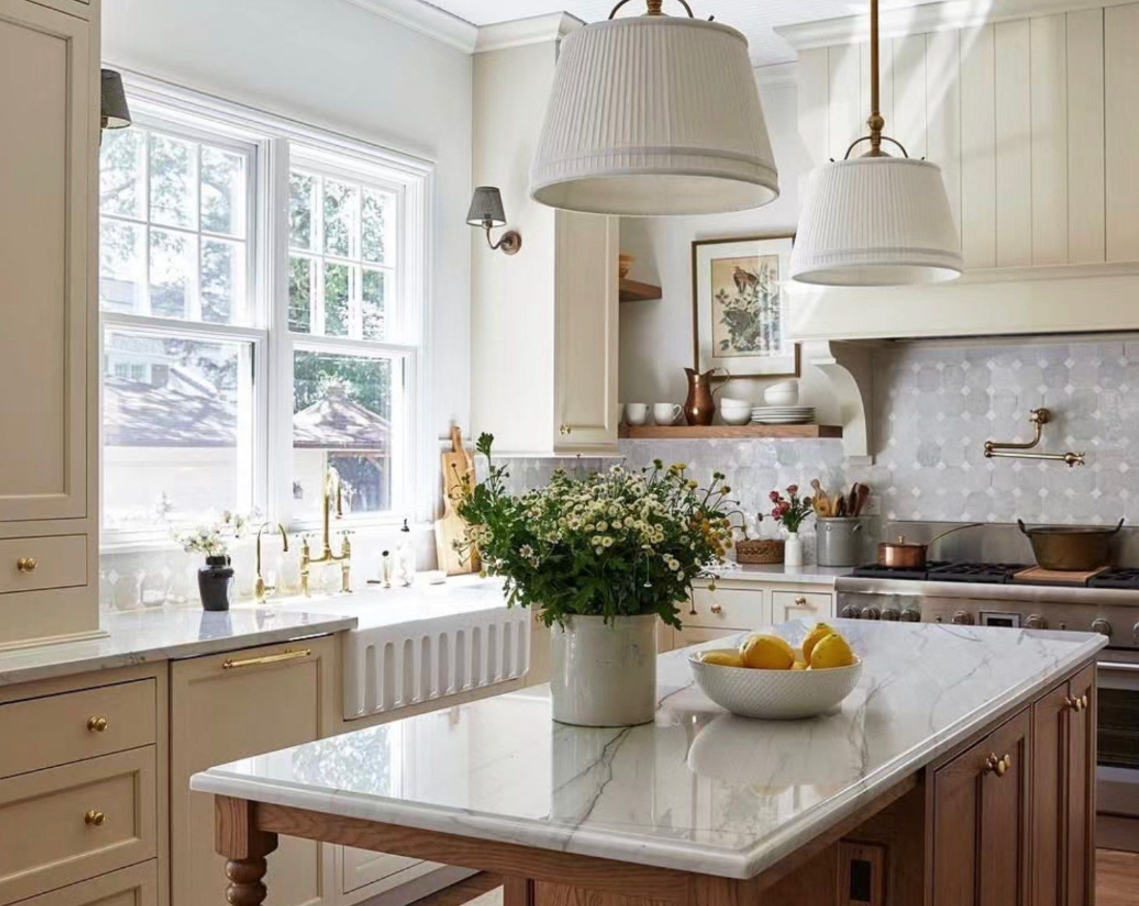
In addition, the placement of the stove is also very important. It should not be placed in the center of the house because this is a central location that requires quiet and stable airflow.
Absolutely avoid placing the kitchen opposite the main door, as this will cause wealth to be lost. Also, do not place the kitchen under a beam, as this creates pressure and suppresses the family's good fortune.
The kitchen should be located in a secluded area, away from strong winds, to ensure the principle of "sheltering from wind and accumulating good energy."
Proper kitchen orientation
According to feng shui, the ideal kitchen orientation is East and Southeast, both directions belonging to the Wood element. Wood plays a role in neutralizing the relationship between Fire and Water, helping to create a more balanced kitchen space in terms of feng shui.
Conversely, homeowners should avoid placing the kitchen facing south, which belongs to the Fire element, because "excessive Fire" can create a feeling of heat, disrupt energy balance, and, according to feng shui principles, may negatively impact the family's wealth.
Additionally, avoid placing the kitchen opposite the toilet, as this is a cooking space that needs to be clean and fragrant.
The kitchen should also not be placed opposite the bedroom because cooking generates a lot of heat, food odors, and grease fumes.
Balancing the Five Elements
The kitchen is where all five elements of Feng Shui converge: Fire (stove), Water (sink), Wood (kitchen cabinets), Metal (kitchen utensils), and Earth (countertop). To achieve Feng Shui balance, homeowners need to pay special attention to the placement of Water and Fire elements.
The stove represents the element of Fire, and the faucet represents the element of Water, which are incompatible. Therefore, the stove should not be placed too close to the sink or refrigerator.
It is also absolutely necessary to avoid having the kitchen positioned between two water elements such as a faucet, refrigerator, washing machine, or sink.
The ideal distance between the stove and the sink is at least 60cm. The refrigerator should also not be placed opposite the stove because, according to feng shui principles, the refrigerator represents storage and preservation of life, which could affect the family's financial stability and health.
The space is clean and well-lit.
A clean and tidy kitchen not only creates a comfortable feeling but also helps maintain positive energy in the living space.
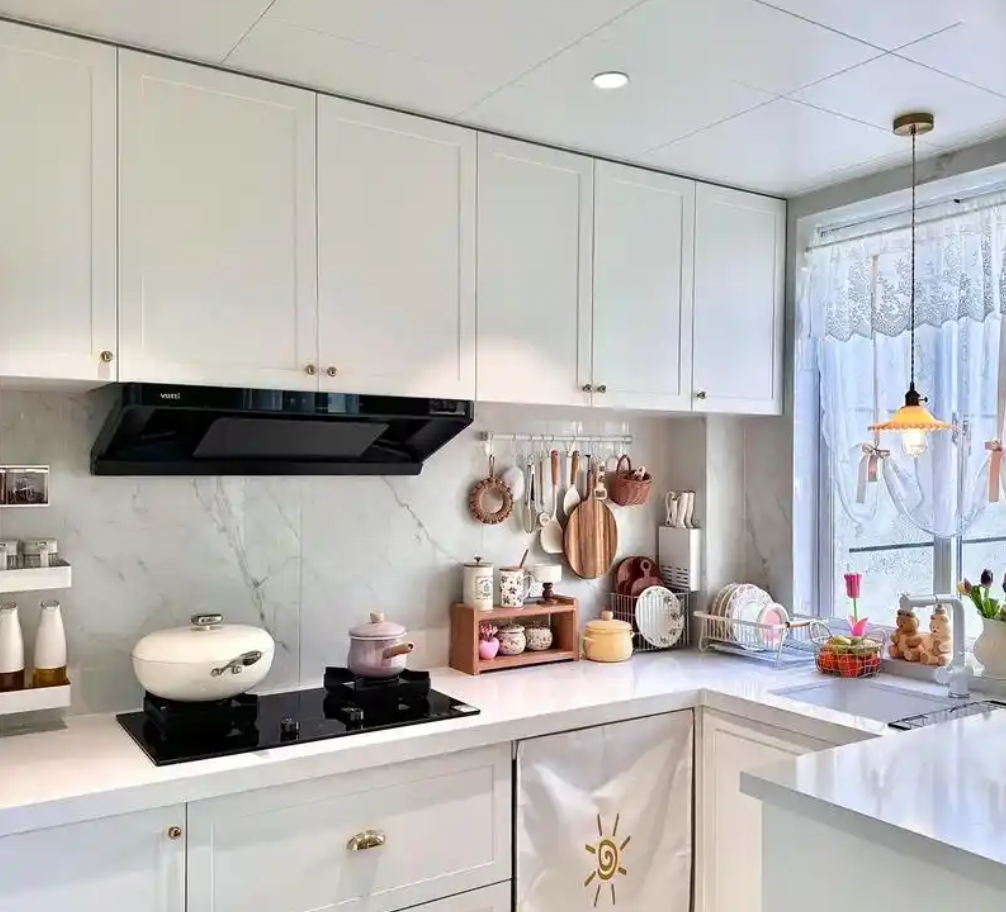
A cluttered kitchen can hinder the flow of energy and negatively impact wealth. Knives and cutting boards should be stored neatly in a safe place, away from falls that could endanger young children.
Lighting and ventilation are also essential elements in a feng shui-compliant kitchen. The kitchen should be designed to maximize natural light, helping to eliminate negative energy.
If there isn't enough natural light, use lighting with warm colors. A well-ventilated kitchen is essential to remove food odors and keep the air fresh. A kitchen that's too enclosed will retain unpleasant smells, but one that's too open won't retain good fortune.
Harmonious colors
Color not only creates aesthetics but also influences the emotions of family members. Since the kitchen is associated with the Fire element, paint colors belonging to the Wood element, such as green or moss green, would be the most suitable choice (Wood generates Fire).
This color scheme helps to make the kitchen space feel cool, creating a relaxing atmosphere and promoting harmony within the kitchen.
Besides green, white is also a popular color because it brings elegance, stimulates the senses, and easily suits any space.
Brown – a neutral color that represents durability and stability – is also a good choice. Homeowners should limit the use of too much red (representing Fire) or blue (representing Water) in the kitchen.
Combining too much of these two colors can easily lead to an unbalanced space and cause frustration for the homeowner.