




As I fought my way through a confusion of linen wide-legs and shorts to find the wool trousers I wanted to wear for my notably chilly early-morning commute the other day, I decided it was high time for a seasonal wardrobe switchover.
Agreed, wardrobe admin can be a chore. However, packing away high-summer styles to make space for your autumn clothes makes dressing for the change in season all the more straightforward.
Not only does it mean not having to rifle through your wardrobe to find a weather-appropriate outfit, but it also allows you to see your clothes, so you’re far more likely to wear them. According to Oxfam’s recent State of Style report, a third of the UK’s wardrobes have not been worn in the past year, and four in 10 Brits have worn an item of clothing just once.
What’s more, taking stock of your wardrobe at the start of the season can also prevent unnecessary panic spending on pieces you already have languishing in a drawer, saving you both money and precious hanging space.
It doesn’t have to be an overwhelming task. “Start small and do one category at a time. Breaking it down into bite-sized pieces is much more fun. It lets you see which of the eight pairs of black trousers you actually love and also rediscover forgotten gems,” says Jenn Jordan, a professional wardrobe organiser.
If you’re pushed for time, or struggle with indecision, Jordan suggests setting a 20-minute timer and sorting against the clock to get quick results.
And if you need a little incentive to tackle your stash, then take a leaf out of stylist Lucy Walker’s book and embrace resale: “I do a clear out once a month and get rid of stuff on Vinted. That often gives me a working budget I can then use to buy anything new that I like.”
From which pieces to pack away to dealing with moth holes, here’s how to organise your wardrobe in shape for the season ahead.
1. Hold on to trans-seasonal pieces
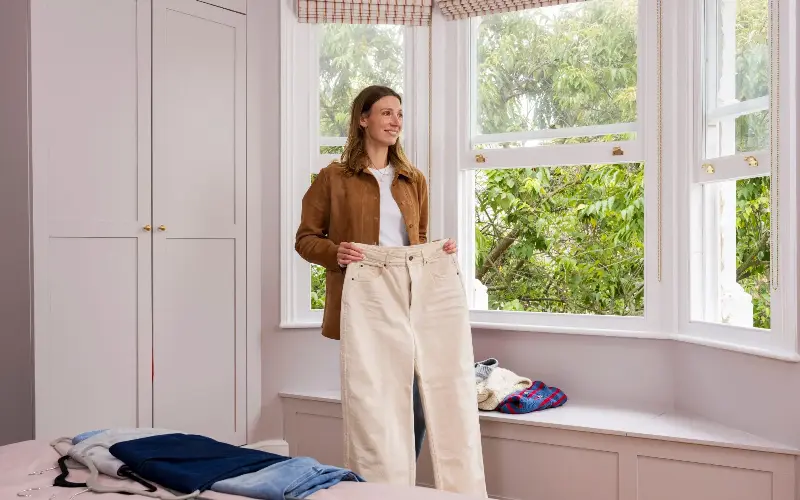
“One of the biggest mistakes people make when doing a wardrobe switch is packing too much away,” says Jordan. Before vacuum-packing all of your dresses, ask yourself whether they can be warmed up for cooler weather with tights and boots. The cotton shirts you’ve been wearing all summer can be layered under knitwear. Keeping trans-seasonal pieces available extends their life span and gives you more styling options, especially while the weather is up and down.
If you’re wavering about whether to pack something away or not, think about the suitability of fabrics and necklines: “Spaghetti straps, linen and bright florals are not going to make the cut in winter,” says Laura Fantacci, the co-founder of style platform Wardrobe Icons, which offers a virtual and in-person wardrobe detoxing service.
2. Mend knitwear
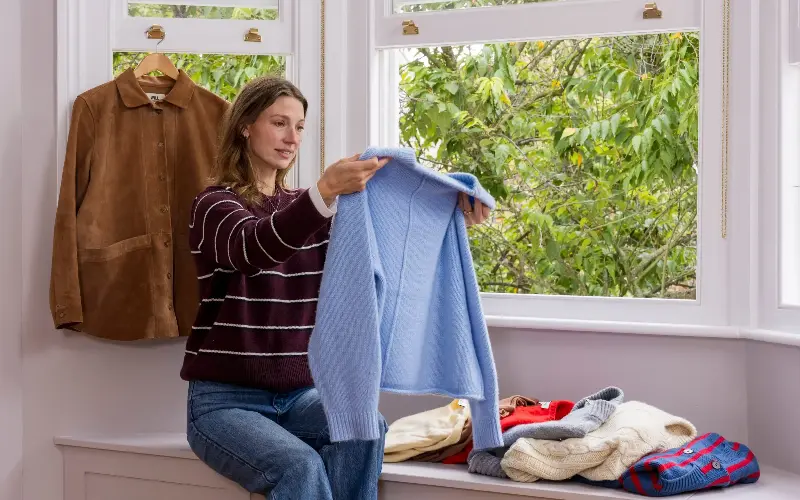
The one wardrobe category you can bank on getting a lot of wear from over the next six-plus months is knitwear. Make your jumper drawer one of the first categories you address in your switch-over process so that you’re ready to layer up when the autumn chill bites.
“The best way to check for moth holes is to hold a sweater up to the light and run your hand through the inside to see if any holes appear. If there’s no moth damage, give it a good steam or use an ironing board to take out any sleeve creases,” says Alex Gore Browne, a knitwear designer. Steamery’s handheld steamer (£100, steamerystockholm.com) is the most effective at-home option around and comes in a selection of sideboard-enhancing colours. Use the electric fabric shaver to gently banish bobbles (£45).
There’s no need to resign your woollens to the bin if the dreaded moths have attacked. Gore Browne recommends sending nibbled knitwear to online repair company The Seam for invisible mends. Or for something more statement, her own repair service uses custom embroidery to transform areas of damage into works of art.
3. Do the changing room test
No one wants to get rid of something only to regret it down the line, so it can be tempting to hold on to pieces “just in case” – the wardrobe in my spare bedroom is testament to this.
To help her clients assess whether they should keep something or not, Jordan advises them to ask themselves whether they would buy it again if they went into a changing room with it today.
“It’s a great question that makes you actually take in how the item really fits, whether it suits your lifestyle and makes you feel great,” she explains. If the answer isn’t a resounding “yes”, then add it to the donation or resale pile.
4. Discover the missing links
Before splashing out on anything new, it pays to work out what pieces you need (if any) and what you already have plenty of. Then make a considered shopping list, rather than taking a scattergun approach which can lead to unnecessary spending on pieces that don’t end up getting worn.
A self-confessed “ruthless editor”, Walker regularly audits her wardrobe by going through each category to identify specific gaps: “I’ll look at, say, my knitwear and check that I’ve ticked off all the boxes: oatmeals, greys, blacks. I certainly won’t be buying another grey, oversized jumper because I already know I have enough.”
When it comes to new-season purchases, Walker says an updated style of shoe has an outfit-transforming effect: “Last autumn that was a boat shoe from J. Crew, this season it’s a flat sock boot from Dear Frances.”
5. How many pairs of jeans do you really need?
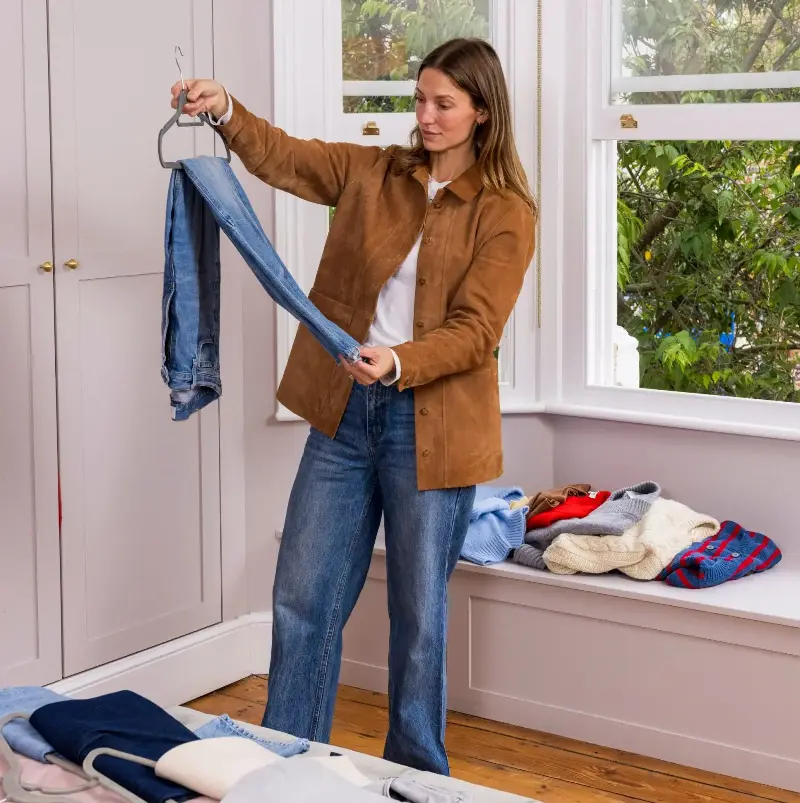
It’s easy for wardrobes to get overstuffed with repeat pieces – last year I was horrified to discover I had more than 20 pairs of jeans filling an entire drawer, most of which I’d forgotten I had, let alone got regular wear from. To tackle oversaturated areas Fantacci recommends having a quick try-on: “Get in front of the mirror and be honest about how something fits, how it makes you feel and whether you still want to wear it.”
I managed to whittle my jeans down to a far more manageable 10 pairs, with one(ish) per silhouette and colour: straight-leg, wide, barrel, baggy, cropped, white, black. I’ve also implemented a strict one-in, one-out policy to stop my collection creeping up again.
As a loose rule of thumb, think about drawing a line once you’ve reached a week’s worth of one particular item: “I have five shirts from the same brand in the same style. I wear them all the time but won’t be buying any more (for now),” says Walker.
6. Sort your basics
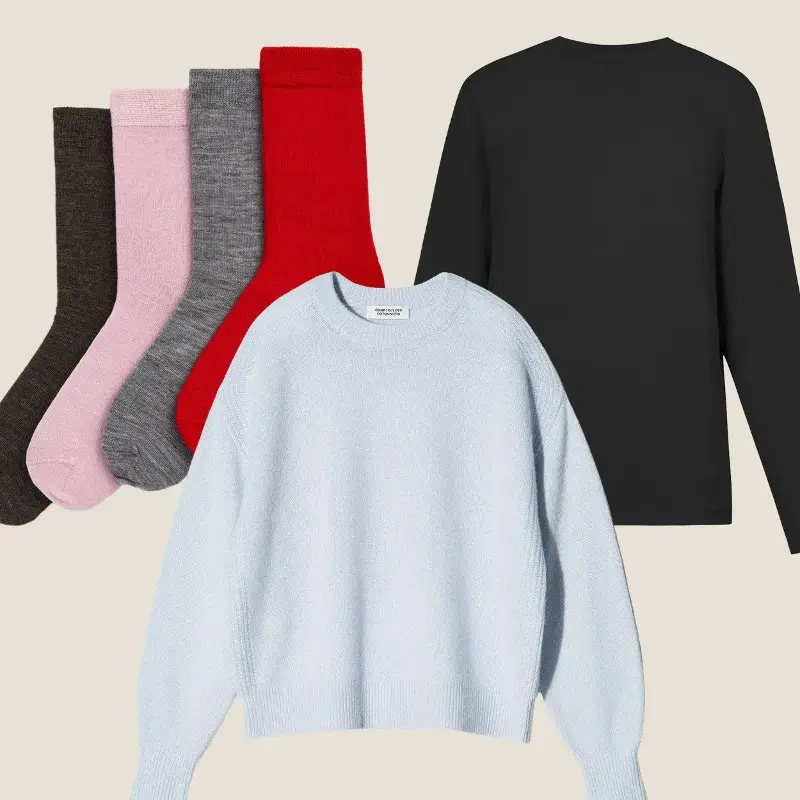
Set of four socks, £40, Pairs; Cashmere crew neck jumper, £149, Uniqlo; Boyfriend T-shirt, £62, Skims at Selfridges
When switching over your wardrobe it’s easy to focus on trophy items such as knits, coats and boots. However, sorting through everyday basics can have a big effect on your outfits.
As we head towards the colder months, long-sleeved T-shirts that layer under knitwear are particularly useful. “I’m a big fan of the Skims long sleeve Boyfriend T-shirt; you can see the cuffs, the neckline and the bottom of the T-shirt when you wear it with a jumper. This detail makes a real difference,” says Walker.
Ropey socks kill a look, especially when you’re wearing low-cut and backless shoes such as clogs and loafers. Replace worn-out styles with Pairs’ breathable merino socks in Correct Grey, or add an on-trend pop of red or cobalt.
7. Use a hanging system
Grouping clothes into categories then hanging them in colour order (Jordan advises going from dark to light, left to right) keeps them organised and easy to see in the morning rush. Slimline flocked hangers save on space and stop slippy fabrics from sliding off. Knitwear should be folded to prevent it becoming misshapen.
Keep only the coats you wear regularly by the door, storing the others on rounded-edge hangers and covered in clear protective bags, so that you don’t forget what’s inside. John Lewis has both. Keep bulky puffers in vacuum bags until they’re needed – a quick spin in the drier with a tennis ball will puff them back up.
8. Utilise under-bed storage
“Never pack away an item of clothing before it has been washed to prevent stubborn stains and moth damage,” says Fantacci who packs her summer pieces into flat boxes, folding them as few times as possible to avoid creases, and slides them under the bed.
If you’re short on space, vacuum bags are a useful alternative, but it’s worth treading with caution: “I have been to many houses and found an ancient vacuum-packed lump of clothes that have been long forgotten about,” says Jordan.
Try setting a reminder on your phone calendar for when the weather changes with a note of where you’ve put your stash.