



Few forces shape our existence as profoundly as gravity. Though we cannot see or touch it, this invisible companion guides our steps, anchors us to the Earth, and orchestrates the grand ballet of the cosmos. Whether you are curious about why you stay grounded or how the vast structures of space remain intact, gravity holds the answers. Let’s explore this powerful, essential force and discover how it influences everything around us.
WHAT EXACTLY IS GRAVITY?
At its most fundamental level, gravity is a force of attraction between two objects that possess mass. Every bit of matter in the universe exerts a pull on everything else.
- Universal Connection: From your body to distant stars, every atom participates in this cosmic tug-of-war.
- Essential Stability: It is the "glue" that keeps our feet on the ground, our atmosphere intact, and our oceans from drifting away. Without gravity, life as we know it would simply not be possible.
HISTORY’S GREATEST GRAVITATIONAL MINDS
Our understanding of this force has evolved through the work of brilliant thinkers who dared to look closer at the natural world.
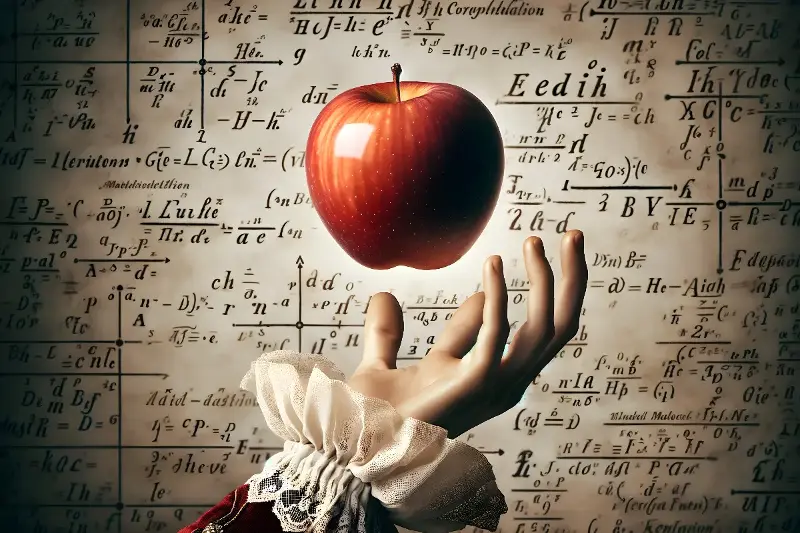
- Isaac Newton: In the late 17th century, Newton described gravity as a universal force. His work allowed us to predict the movements of planets and falling objects with stunning accuracy.
- Albert Einstein: In the 20th century, Einstein revolutionized our perspective with his theory of General Relativity. He proposed that gravity is not just a pull, but a result of massive bodies curving the very fabric of space and time. Imagine placing a heavy ball on a trampoline; the fabric sags, causing nearby objects to roll toward it. This is how space-time behaves around stars and planets.
GRAVITY’S ROLE IN EVERYDAY LIFE
We feel the effects of gravity in every action we take. It is a constant presence that dictates the physics of our daily world.
- Physical Movement: Whether you are shooting a basketball, diving into a pool, or simply walking, gravity determines the arc and speed of your movement.
- Technological Precision: Our modern lives depend on gravity calculations. GPS systems in your phone must account for the way gravity slightly slows time, utilizing Einstein’s complex math to provide you with perfectly accurate navigation.
GRAVITY ACROSS THE SOLAR SYSTEM AND BEYOND
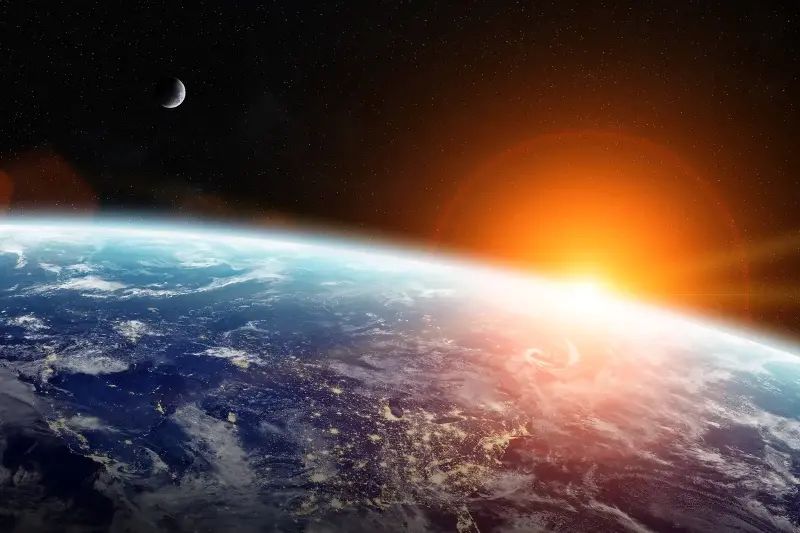
Beyond our planet, gravity acts as the master architect of the solar system. The Sun’s massive gravitational field keeps planets in their stable orbits, while the Moon’s pull creates our tides and stabilizes Earth’s tilt, which is crucial for our predictable seasons.
On a cosmic scale, gravity is responsible for the life cycle of stars. Huge clouds of gas collapse under their own weight to ignite new suns, while the most massive stars eventually collapse into mysterious black holes—regions where gravity is so intense that not even light can escape its grasp.
MIND-BLOWING GRAVITATIONAL PHENOMENA
The study of gravity continues to reveal incredible secrets about the nature of our universe.
- Gravitational Waves: Recently, scientists confirmed the existence of ripples in space-time caused by distant, cataclysmic events like merging black holes. These waves allow us to "listen" to the universe in ways we never could before.
- Dark Matter and Energy: Much of the universe's gravity comes from invisible sources. Dark matter acts as the scaffolding that holds galaxies together, while dark energy appears to be accelerating the expansion of the universe itself.
From the simple act of taking a step to the grand, swirling spirals of distant galaxies, gravity is always at work. It is the silent, constant force that shapes our home and the vast cosmos beyond, inviting us to keep exploring the mysteries of the stars.