


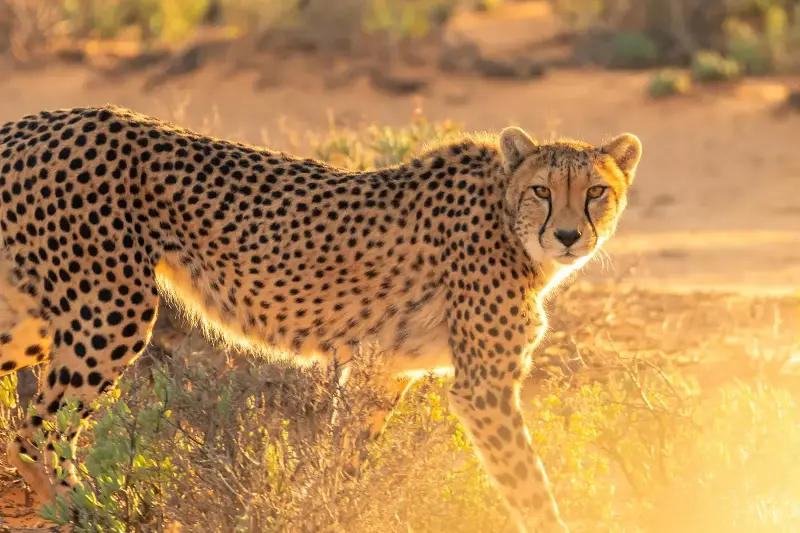
When you think of speed on land, one animal leaves all others in the dust: the cheetah. More than just a simple feline, the cheetah is a masterclass in evolutionary engineering. Every aspect of its body—from its skeletal structure to its respiratory system—is fine-tuned for extreme acceleration and agility. Their story is not just about raw velocity; it is about the extraordinary biological adaptations that make such incredible speed possible. Let us dive into the fascinating world of these big cats and discover the secrets behind their legendary pace.
A RECORD-BREAKING RUNNER
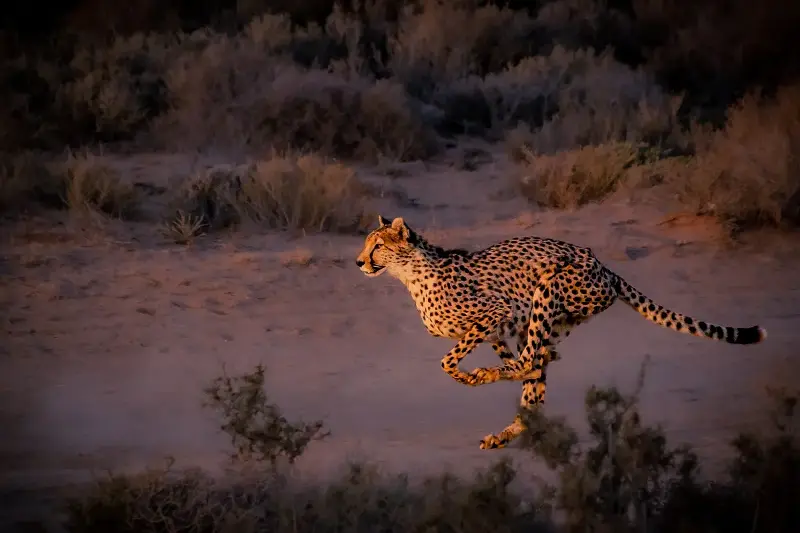
Cheetahs are, without competition, the fastest animals on land. They can reach speeds of up to 70 miles per hour in short, explosive bursts. What is truly breathtaking is not just their top speed, but how quickly they achieve it: they can accelerate from 0 to 60 mph in a mere three seconds.
For comparison, that is faster than most high-performance sports cars. While this incredible velocity is typically sustained for only 20 to 30 seconds, it provides just enough power to outrun nimble prey across the open plains.
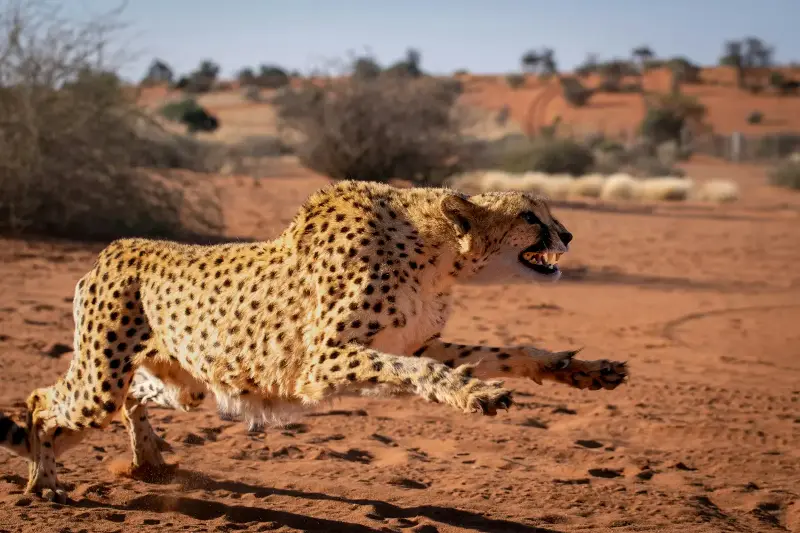
BUILT FOR SPEED: THE CHEETAH’S UNIQUE PHYSIQUE
The cheetah’s body is a symphony of features custom-built for the chase:
- Aerodynamic Frame: Weighing between 75 and 140 pounds, their slender torso minimizes drag.
- The Springing Spine: Perhaps their most remarkable feature, the spine is extraordinarily flexible. It acts like a coiled spring, allowing each stride to cover an astonishing 23 feet.
- Precision Tools: They possess non-retractable claws that function like running spikes for extra grip, and a long, muscular tail that acts as a rudder for high-speed turns.
- Lightweight Limbs: Long, spindly legs and a small collarbone allow for an exceptionally long, efficient stride.
THE SCIENCE OF BREATHING AND HEARTBEAT
High-speed chases require more than just muscular power; they demand peak internal endurance. During a pursuit, a cheetah’s respiratory rate skyrockets from around 60 breaths per minute to as many as 150.
Their large nasal passages and lungs work in tandem to ensure rapid oxygen delivery to those fast-twitch muscles. Additionally, their hearts are notably large in proportion to their bodies, allowing them to pump oxygen-rich blood to critical limbs with maximum efficiency. It is a delicate biological balance: cheetahs must secure their goal quickly to avoid overheating and exhaustion.
EYES ON THE PRIZE: VISION AND STRATEGY
Speed is useless without the ability to see what lies ahead. Cheetahs have large, forward-facing eyes set high on their heads, providing a wide field of view and exceptional depth perception. They can spot prey from up to three miles away in the open savannah.
Their hunting strategy relies on stealth and burst acceleration rather than prolonged endurance. They typically stalk their target until they are within 100 to 300 feet. Once the chase begins, they use their agility to make rapid, sudden direction changes, outmaneuvering escape artists by anticipating their every move.
SURVIVAL STRATEGIES AND SOCIAL LIFE
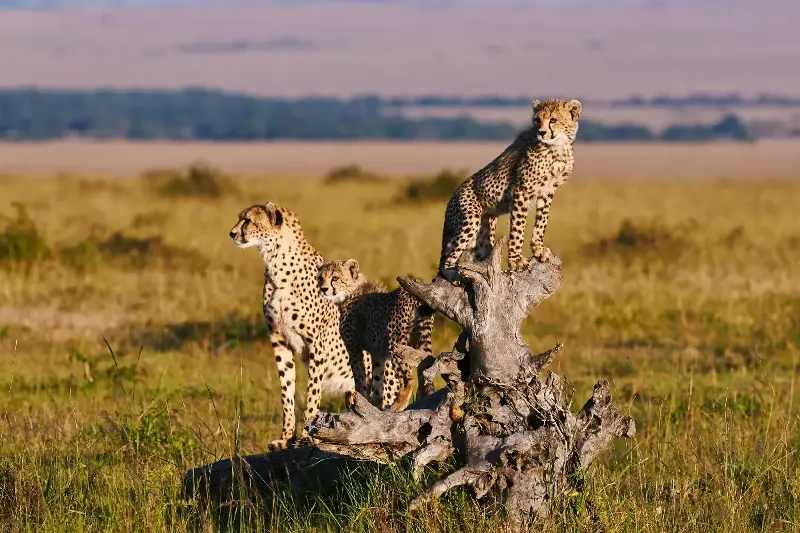
While cheetahs are speed specialists, their build comes at a cost. They lack the brute strength and retractable claws of other large cats, which means they must often rely on observational skills to navigate their environment.
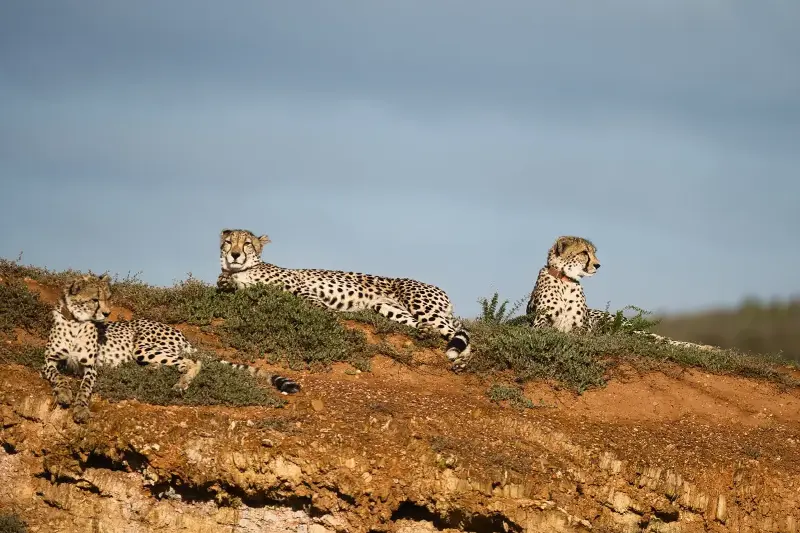
Their social structure is also quite unique. While females are generally solitary, males often form small groups called coalitions, usually made up of brothers. This group lifestyle increases their ability to defend territories and ensures they remain strong in the face of challenges.
AN EVOLUTIONARY MARVEL AT RISK
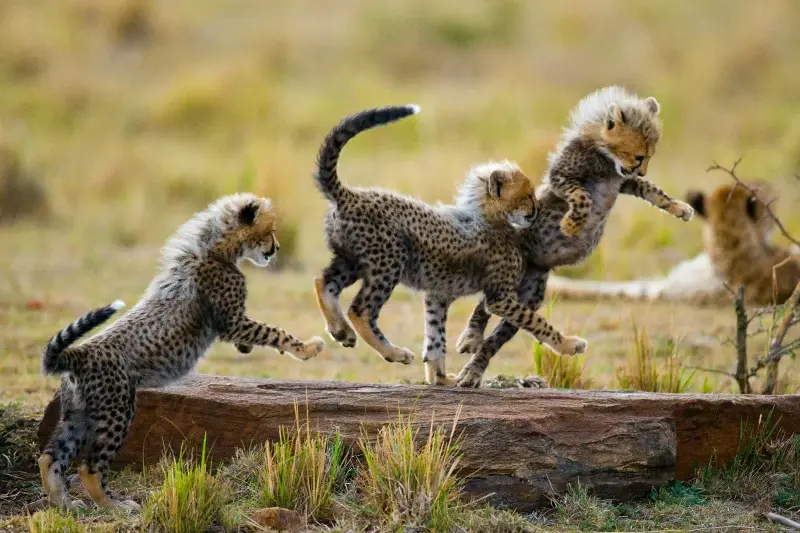
Millions of years of adaptation have resulted in an animal near-perfection for speed, yet this specialization makes them vulnerable. With roughly 7,000 individuals left in the wild, cheetahs face significant challenges, including habitat loss and the need for greater genetic diversity.
Conservationists are working tirelessly to protect their landscapes, ensuring these magnificent creatures continue to thrive. Every cheetah counts, serving as a living testament to nature’s brilliance. The next time you see a cheetah stretching into a blur across the savannah, remember that it is more than just a hunt—it is the result of nature putting all its energy into the pursuit of perfection.