



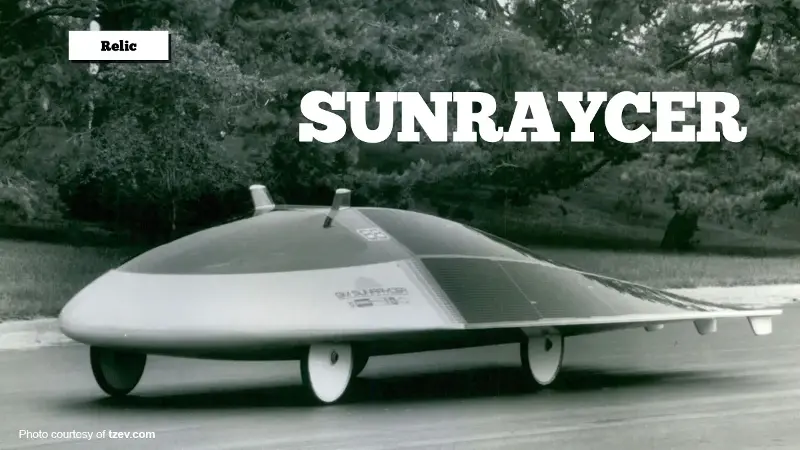
As of this writing, the call for renewables should be stronger than ever. Gas prices have historically been volatile, which would suggest that cars that run on renewable energy should be more popular. While electric cars and hybrids are now more prevalent than before, there is still a considerable financial hurdle to clear before one can own one. My research took me to a car called the Sunraycer, which was supposed to bring renewable energy automobiles to the mainstream. What was the Sunraycer, and why did the solar car fail to make it into the hands of everyday people like you and me?
General Motors (GM) requested its Australian division to participate in the World Solar Challenge, a race featuring only solar-powered cars. CEO Roger Smith was on board and funded a study to see if it could be built in 10 months, with completion by 1987. AeroVironment conducted the study and was also given the contract to build the car. The goal was not only to create a solar-powered car, but also one with low weight and low wind resistance. The car only weighed 265kg (585lb) and had a low drag coefficient. The car also had a top speed of 109kph (about 68mph). Hughes Aircraft manufactured and installed 8,800 solar cells on the Sunraycer. With the sun overhead, the car could generate around 1,500kW of power. The engine was based on Magnequench permanent magnets, and the battery was composed of silver oxide.
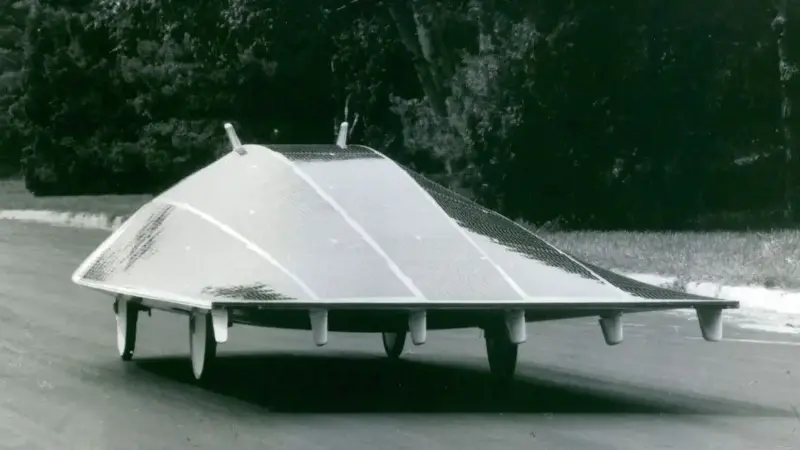
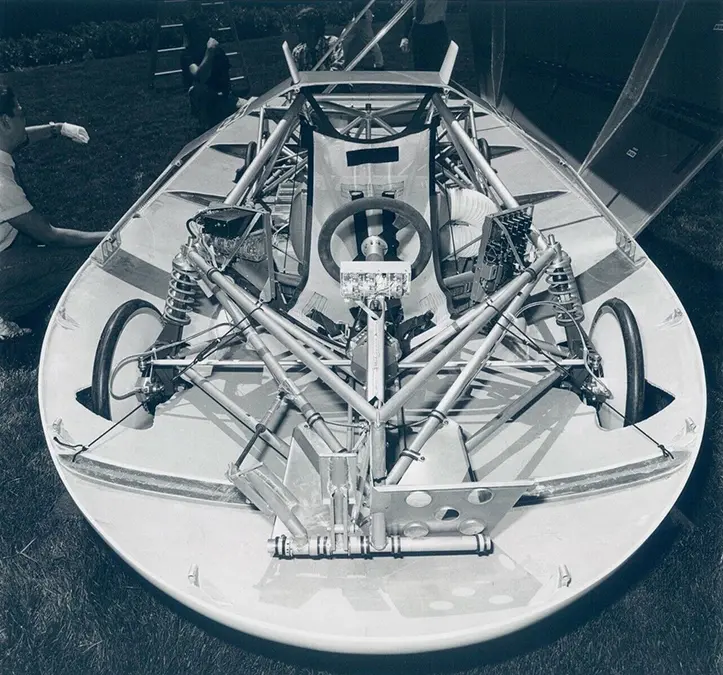
The race only ran between 8 am and 5 pm, allowing the cars to drive during peak sunlight hours. The Sunraycer even set a world record of 58kph (36mph) from solar power alone. The car reportedly cost USD2 million to build (USD5,813,609.15 in 2026). The World Solar Challenge took place in November 1987, running from Darwin, Australia, to Adelaide, Australia, passing through the Australian outback. Veteran racer John Harvey, also from Australia, drove the Sunraycer, which won the World Solar Challenge. GM CEO Roger Smith personally went to Adelaide to congratulate the winning team. But was this the beginning of a solar-powered car that everyone could use?
In 1988, the Sunraycer once again broke the solar-powered speed record, coming in at 121kph (75mph) at Mesa, Arizona. This was in the midst of a tour in the United States. However, solar power took a different turn (pun intended). Solar power became better known for non-automobile uses, such as powering homes. This is especially useful in areas where the sun is prominent, such as the deserts of North America, Africa, and Western Asia.
While the solar car got much faster over time, topping out at around 120kph (75mph) by 2011, there has yet to be a commercial car that runs on solar power alone. Some projects have emerged in the 2020s, but only the Lightyear 0 in the Netherlands reached the production stage. To this day, many cars use a mix of fossil fuels and electric power. The good news is that the sun will still be around for a long time, and that can hopefully encourage humanity to build a truly solar-powered car.
Words by Jose Alvarez
Also published in GADGETS MAGAZINE Volume 26 Issue No. 9